Tuesday, December 26, 2006

Gloria!


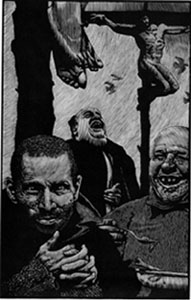
Still enjoying the Immanuel!? Feast your eyes on this portrait by Caravaggio (1609) and enjoy a modern English version of the ancient Christian Gloria (hum along with me), translated from the Latin that was adapted from the original Greek:


Glory to God in the highest,
And peace to His people on earth.

Lord God, heavenly King,
Almighty God and Father,
We worship you, we give you thanks,
We praise you for your glory.

Lord Jesus Christ, only Son of the Father,
Lord God, Lamb of God,
You take away the sin of the world,
Have mercy on us;
You are seated at the right hand of the Father,
Receive our prayer.

For You alone are the Holy One,
You alone are the Lord,
You alone are the Most High,
Jesus Christ, with the Holy Spirit
In the Glory of God the Father. Amen.

enjoy, ron

Saturday, December 23, 2006

Christmas Grace: Salvation!


Grace is impossible for sinners to grasp. And as soon as we gather that it is impossible, we turn the “grasping of it” into a contest. Once we get it, we begin to work it! And the winner of the best “grace project” award gets a stint at “the head of the class”. Yet in the end, grace means that some with the wrong answers will be saved and some with the right answers won’t be. The salvation that came to the world was all of grace!

Friday, December 22, 2006

God’s Plan: Immanuel!


I’m posting a small excerpt from my upcoming Sunday sermon (Christmas Eve, 12/24/06)

During the Christmas season we celebrate the fulfillment of God's intimate plan to be visibly present among us (Matthew 1.21-23). God’s Immanuel! The promise to become evident to His people given some 730 years before its time (Isaiah 7.14). Today we celebrate the birth of the "Immanuel"; we celebrate the birth of "God with us."

So the meaning of Christmas is that God’s intimate, visible presence with fallen mankind has been reestablished. God is now with us in the person and work of Jesus Christ. The question is: “What does it mean for you and me that the Immanuel has been born?” Three things!

First, it means salvation. The Immanuel is a sign of God's visible saving presence. The Immanuel is a sign that God will deliver His people. Remember what the angel said to Joseph, the husband of Mary! (Matthew 1.21) The Savior is the Immanuel and the Immanuel is the Savior!

The birth of the Immanuel means salvation from sin for everyone who believes (Rom 1:16), for everyone who repents of their sin and exercises faith in the powerful presence of Jesus, the Christ, the Messiah.

Second, the birth of the Immanuel means that God will not leave, forsake, or fail His people. The name "Immanuel" is a watchword among God's people; it is a word of hope. No matter how desperate conditions become we know that God is with us (Romans 8. 38-39).

Third, the birth of the Immanuel means we have no reason for ungodly fear. "If God is for us and with us, who can be against us?" asks Paul (Rom 8:31)? We know that no evil, no world, no flesh, no devil is so great that the actual presence of God in Christ Jesus and in our lives is not more than able to overcome it.

enjoy, ron

Friday, December 15, 2006

Bible Humor?

www.reverendfun.com

It’s been some time now since I’ve posted a little humor. I know that the below story isn’t new but what is? Besides I’m going with a safe one here. I hope it doesn't bomb!

There was this Christian lady that had to do a lot of traveling for her business, so she did a lot of flying. Flying made her nervous, so she always took her Bible along with her to read and it helped relax her.

One time, she was sitting next to a man of letters. When he saw her pull out her Bible, he gave a little chuckle and went back to what he was doing.

After awhile, unable to resist, he turned to her and asked, "You don't really believe all that stuff in there do you?"

The lady replied, "Of course I do. It is the Holy Bible."

He said, "Well, what about that guy that was swallowed by that whale?"

She replied, "Oh, Jonah. Yes, I believe that, it is in the Bible."

He asked, "Well, how do you suppose he survived all that time inside the whale?"

The lady said, "Well, I don't really know all the details. I guess when I get to heaven, I’ll ask him."

"What if he isn't in heaven?" the man asked mockingly.

"Then you can ask him." replied the lady confidently.


For I am not ashamed of the gospel, for it is the power of God for salvation to everyone who believes (Rom 1.16).

So faith comes from hearing, and hearing through the word of Christ (Rom 10.17).

For the word of God is living and active, sharper than any two-edged sword, piercing to the division of soul and of spirit, of joints and of marrow, and discerning the thoughts and intentions of the heart (Hebrews 4.12)

enjoy, ron

Monday, December 11, 2006

Hebrews 9 & 10


Our Wednesday night Bible Study group is just entering a verse by verse study of the book of Hebrews. This video is from the WorshipGod06 Conference Aug. 9-12, 2006. Ryan Ferguson is giving a memorized dramatic recitation of Hebrews 9 & 10 from the ESV Bible. Take a listen! God’s Word is powerful!

The Holy Bible, English Standard Version is copyright ©2001 by Crossway Bibles, a division of Good News Publishers. Used by permission. All rights reserved.

Friday, December 08, 2006

Einstein & a personal God

We read in 1 Corinthians 2.6-16 that a message of wisdom is spoken among the mature or spiritual. But this sort of wisdom remains a mystery to those without the Spirit, regardless their genius.

Albert Einstein knew something about mystery and considered himself to be a deeply religious man. We are told that he came to this position through his deep sense of the incomprehensible mystery in which he thought the cosmos was implanted. As far as we know, Einstein also looked favorably on the ethical teachings of Jesus and the prophets. However, he considered belief in a personal God to be the main obstacle to the reconciliation of science and religion. What do you think? Is belief in a personal God compatible with a scientific understanding of the world?

The Apostle Paul informs us that a person without the Spirit does not accept the things that come from the Spirit of God (2.14). So how is it that a human being, even an unscientific one, can know the wisdom of God? How can a person make such a high and exalted claim as to know the very mind of God, specifically, to have the mind of Christ (16b)?

In other words, how does the Spirit work? How does He impart this wisdom, this mind, to humankind? We are told that the Spirit's activity is an action of inward illumination (vv. 10, 13). That is, a person's natural, spiritual blindness is removed, the veil is taken from the eyes of their heart, their pride & their prejudice are alike broken down, & they’re given an understanding of spiritual realities.

The wisdom of God would have never been discovered by scientific investigation alone. Further, without the Spirit’s intervention, it would have never occurred to Einstein that God was (and is) personal. For as verse 7 says, it’s a "secret & hidden wisdom," or it’s a wisdom "in a mystery & concealed." So the only way for anyone to know it is for God to reveal it. Revelation is the act of God whereby what once was concealed from us is now made known to us.

Paul tells us something about this process in vv 10–13. He uses an analogy: among humankind a person's thoughts & concerns are only known to the spirit of that person. And only if he wills can another person become privy to what those thoughts & concerns are. If one desires one can reveal his thoughts. So it is with God: no one knows God’s mind except God’s own Spirit. But God has willed to impart God’s wisdom by his Spirit.

Consequently, it is not belief in a personal God that stands as the main obstacle to the reconciliation of science and religion. It is unbelief! After all without faith in a personal God (revealed by and through the Spirit in the Person and work of Jesus Christ) no one can even begin to plum the elements of compatibility between religious truth and a scientific understanding of the world?

Friday, December 01, 2006

Mind Games!


As most of you know the word "philosophy" means "love of wisdom." Personally, I have long considered myself a lover and seeker of wisdom. Christians would be hard put to oppose philosophy in principle. After all, in light of 1 Corinthians 2.6 “…we do speak wisdom!" There is a wisdom which we are commanded to seek and which we should treasure and which we speak. In that sense all Christians should be amateur philosophers - lovers and seekers of wisdom

All through the early years of my call to Christ, I was relentlessly challenged by and compelled to read the biblical wisdom literature. For example, “My son, if you receive my words and treasure up my commandments with you, making your ear attentive to wisdom and inclining your heart to understanding; yes, if you call out for insight and raise your voice for understanding, if you seek it like silver and search for it as for hidden treasures, then you will understand the fear of the Lord and find the knowledge of God. For the Lord gives wisdom; from his mouth come knowledge and understanding…” (Proverbs 2.1-6).

Of course there can be no saving faith that rests on the wisdom of men (1 Corinthians 2.5). After all, according to 1 Corinthians 1.18ff worldly wisdom considers salvation through a crucified Christ to be foolishness! Absolute nonsense! Now the reason it does is because, on the one hand, the death of Christ is a severe indictment of humankind’s utterly sinful condition, but, on the other hand, the wisdom of the world is totally devoted to achieving and maintaining its own self-sufficiency and ground for boasting.

It’s important to note that the use of the mind per se isn’t evil. Believer’s are not to be anti-intellectual. Rather the Scripture is concerned with how you use your mind, what it comes up with, what it is motivated by (Romans 12.1-2). Which means that the alternative to a self-important use of the mind should not be no use but rather a Christ centered use. The alternative to self-righteous competence is not selfless incompetence but Christ competence.

Thursday, November 30, 2006

Wilberforce & salvation!

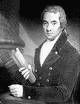
There is a famous story from the days following the Great Awakening. It concerns two prominent men of that day, William Wilberforce, the member of Parliament who was so instrumental in the abolition of the slave trade in the British Empire and his friend, William Pitt, the younger, who was once Prime Minister of Britain.

Now Wilberforce had become a devout Christian and Pitt was a Christian only in the nominal, formal sense. One common among the upper classes in Britain in those days. But, notwithstanding this difference in viewpoint, the two refined gentlemen remained personal friends.

But, as Christians will be, Wilberforce was concerned for his friend and wanted him to find Jesus Christ. After many attempts, Wilberforce finally prevailed upon Pitt to accompany him to hear the renowned evangelical preacher, Richard Cecil. Cecil was a gospel luminary in that second generation of Awakening men, a good friend of John Newton.

So the two men went along to the service. According to Wilberforce, Cecil was at his very best that day and preached the gospel in a most powerful and elevating way. Wilberforce himself was carried away by the sermon and wondered the whole time what his friend Pitt was thinking as he heard this masterful presentation of salvation in Christ.

Well, he didn't have long to wait before finding out. As they were still making their way out of the building after the service, Pitt turned to his friend and said, "You know, Wilberforce, I haven't the slightest idea what that man has been talking about." And, of course, he didn't. He couldn't grasp it. It made no sense to him. What was light and life and the plainest sense to Wilberforce was so much confusion and silliness to Pitt.

But the natural man cannot understand the things of the Spirit of God (see 1 Cor. 2.14). Indeed, it is this fact that explains why, in the Bible, no one is ever surprised by unbelief. Jesus never was. Paul never was. Unbelief is mankind's natural state and it will never be surmounted unless the Holy Spirit works.

Saturday, November 25, 2006

Cross-Living!


What is Cross-living? Sounds like the title to a new TV mini-series. What does Cross-living have to do with a world of pleasure seekers?

Jesus stated in Luke 9:23 - "If anyone would come after me, let him deny himself & take up his cross daily & follow me." When Christ died on the cross for sinners he not only stood in my place, doing what I never could do, but he also showed me how to Cross-live.

Christ’s death saves us from eternal death but not from the cross life! He died so that we could be glorified, but not to keep us from being crucified. "If anyone would come after me, let him deny himself & take up his cross daily." For the Christian the cross of Christ isn’t merely a past place of substitution. It’s also a present place of daily putting to death. That is Cross-living!

We can never let the cross lose its crucifying power in our life! We can never let it slip into the muted & murky past as though Christ died for sinners so that we can live for pleasure. That is pleasure-living!

Eternal pleasures are coming! Many are already here! (forgiveness & acceptance & holiness & healing). But just like Jesus endured the cross for the joy that was set before him, so it is with us in this fallen age (Hebrews 12:1-11). Since most of the joy we long for is still over the horizon, we are to "…go forth to him outside the camp, bearing abuse for him. For here we have no lasting city, but we seek the city which is to come" (Hebrews 13:13-14).

In other words if you would save your life you must lose it & if you would follow Jesus you must take up Cross-living daily. The huge calamity of much contemporary Christianity is that Cross-living has no appeal. And practically what it means is that Jesus lived in poverty so that I might live in wealth. And the more stuff we have the more we honor the cross - so goes the prosperity gospel.

So what is Cross-living? Plainly put it is taking up my own cross & dying to self, daily.

Sunday, November 19, 2006

Word of the Cross!

Note: It's been some time since I posted. Thought I might show a couple paragraphs from today's sermon. I'm currently preaching through 1Corinthains.

In verse 18 of 1 Corinthians 1, the Apostle Paul begins by saying: "For the word of the cross is foolishness to those who are perishing…" They are perishing precisely because they don’t know themselves to be perishing. They have no idea of their desperate need for salvation. As Paul says of himself in Rom 7, Christ never made any sense to him until he first realized himself a sinner, in bondage to sin, & in desperate need of redemption.

The word of the cross doesn’t belong to the perishing but to those "who are being saved." God has built His kingdom in such a way that the Saved are entrusted with the word of the cross. Plain & simple! The word of the cross stands alone! It alone will cut to the heart of all self centeredness. It alone is central to salvation.

It belongs to the saved but it stands alone! We need not "decorate" the cross with any earthly wisdom or technique so as to make it more acceptable to the perishing. The power of the cross rests in the Word! There’s nothing we can do to make the Gospel more palatable to a hard heart. Only if the Spirit of God goes forth first & makes dead people alive will the word of the cross be effectual. Therefore, we rely on God's good purposes in regeneration, not our oratory skill or technological prowess or worldly wisdom.

Enjoy, Ron

Thursday, October 19, 2006

David Eugene!


David Eugene Edwards is the lead singer, main songwriter and principal musician of the Woven Hand band. He is the former lead singer of 16 Horsepower. His music defies simple genre categorization and his lyrics often combine the apocalyptic elements of darkness, judgment and redemption. It’s my kind of popular Christian music never heard on popular Christian radio stations. His theological bent is Reformed/Calvinistic and on stage his performances are evangelistically intense, eerie and persuasive.

Edwards performs on the soundtrack to the short film "Searching for the Wrong-Eyed Jesus," playing the traditional "Wayfarin' Stranger." He also appears in this religiously agile film, playing a fragment of "Phyllis Ruth," a Sixteen Horsepower song from 1997's Low Estate.

If you haven’t heard David Eugene, it’s time! Don’t delay! Start now my little Pilgrim’s Progress!

The above image is of David Eugene Edwards of 16 Horsepower/Woven Hand performing solo at Debaser in Stockholm, Sweden, 2004-05-25. (c) Anders Jensen-Urstad.


enjoy!

Thursday, September 21, 2006

Back to school!


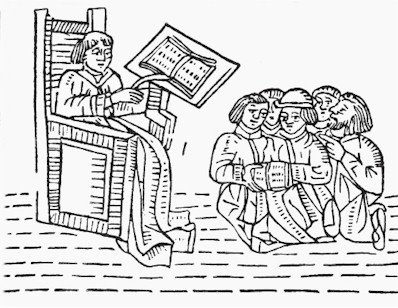
My youngest daughter (12 yrs) is attending a charter school this year. It was established in our community a couple of years ago and begins with the 6th grade. The interesting thing about this school is its emphasis on a classic education and its curriculum has a medieval flavor.

The focus is on the liberal arts. First the "trivium" of grammar (including Latin) , rhetoric (with an emphasis on letter writing), and dialectic (logic and reasoning). Then the "quadrivium" of arithmetic, history, science, and music.

This course of study could be arduous for my daughter who spent her grammar school years in a French Immersion school. She is a high energy gal and bound to become bored and impatient. She is not alone in this matter. It is a time honored experience. The story goes that a number of students evidently grew impatient toward the end of the day during medieval school days as well. It seems there was a law on the books in Padua that prohibited students from pounding on their desks to force the teacher to dismiss class early.

Nevertheless, despite the rigors and boredom of formal education, many new students are flocking to this charter school. Also, my daughter’s classical curriculum may once again transform my own educational horizon. Vicariously, I’m feeling a pinch of educational excitement, thanks partly to the challenge of learning Latin and reading Homer again.

Want to learn more?
Explore the medieval curriculum

Wednesday, September 20, 2006

Be Reasonable Pope!

Islamic militants in Iraq and the Palestinian Territories (PT) have threatened to destroy churches and kill Christians in response to Pope Benedict's speech at the University of Regensburg. It seems that a 14th Century Byzantine emperor quoted in the Pope's address had asserted that violent Islamic jihad is evil and essentially unreasonable because it is contrary to the very nature of God. The pope himself has said his talk was meant to increase dialogue between religious traditions. If his only true intention was to cultivate dialogue and not to criticize, why did the pope decide to evoke Islamic violence rather than the history of Catholic violence to make his point? What, exactly, does he mean to say about the differences between Christianity and Islam? For that matter, what about the differences between Catholicism and Protestantism?

Let’s look at some raw and painful facts. Two of seven churches already attacked in PT have been destroyed. A 70-year-old nun was ambushed and shot in the back in Somalia. Al-Qaeda in Iraq has vowed to 'destroy the cross', slit the throats of Christians and make their belongings and children the bounty of the mujahideen.

Note 1: Pray for these most vulnerable and endangered Christian believers, that God will be their deliverer.

Note 2: Ramadan starts on 24 September - the 30 Day Muslim Prayer Focus is available at <http://www.30-days.net/>.

Note 3:For the full text of the Pope's speech at the University of Regensburg: <http://www.cwnews.com/news/viewstory.cfm?recnum=46474>

Note 4: I personally disagree with the Pope's assertion that the Reformers sacrificed reason in the pursuit of Biblical faith but do not see this as grounds for global Protestant rioting.

Friday, September 15, 2006

Just Walk'n

Listening to Dylan’s Modern Times isn’t the only reason I haven't been posting lately. Things are dreadfully busy in my life. For example, within the past thirty days, I started a new company, began a novel bi-vocational relationship with my church and refereed five of my seven children back to school (three in college).

Be with you soon, ron

Wednesday, September 06, 2006

Levee's gonna break muse!

Although “Everybody saying this is a day only the Lord could make”, a broken levee was the chief culprit behind the deluge of New Orleans by Hurricane Katrina last year. Unfortunately, it kept on rainin’ and many were flooded out of their homes; some died!

Floods are insidious that way. Since the days of Noah, they remain one of humanity's greatest scourges. Despite all our modern times know-how, handymen and engineers still reckon with a simple truth: "The levee gonna break."

And according to ancient myth when the levee broke:

The gods were frightened by the deluge,
And, shrinking back, they ascended to the heaven of Anu.
The gods cowered like dogs
Crouched against the outer wall.

- Utnapishtim, The Epic of Gilgamesh

Of course, there’s always the Millennium, Few more years of hard work, then there'll be a 1,000 years of happiness, at least, for those who are awake when she breaks: “Some people still sleepin', some people are wide awake.”

Reminiscent of the Preacher’s verdict in Ecclesiastes: “Without you there's no meaning in anything I do.” Speaking of meaning, I’m thinking of Christ Jesus when I hear:

Well, I look in your eyes, I see nobody other than me
I look in your eyes, I see nobody other than me
I see all that I am and all I hope to be.


If it keeps on rainin’ the levee gonna break! Yet, some of these people don't know which road to take!

On the sinner impose his sin,
On the transgressor impose his transgression!
Yet be lenient, lest he be cut off,
Be patient, lest he be dislodged.
Instead of thy bringing on the deluge,
Would that a lion had risen up to diminish mankind!
Instead of thy bringing on the deluge,
Would that a wolf had risen up to diminish mankind!
Instead of thy bringing on the deluge,
Would that a famine had risen up to lay low mankind!
Instead of thy bringing on the deluge,
Would that pestilence had risen up to smite down mankind
!
- Utnapishtim, The Epic of Gilgamesh

"So, Put on your cat clothes, mama, put on your evening dress!"

After the deluge in Genesis, Noah gets his reward, not only in the form of God's covenant, but also in grilled steak and a nice merlot. Genesis notes that God allows Noah and his descendants to eat meat (9:2-4) and that Noah, thirsty for more than water, plants a fine vineyard (9:20). "I woke up this morning, butter and eggs in my bed."

"Riches and salvation can be waiting behind the next bend in the road!"

A little "gutter" talk, ron

Tuesday, August 29, 2006

Ain't talkin' yet!

Today I’m glad to have Dylan around! Remember this; he’s your servant both night and day. As I continue listening to his new album, I’m becoming extra nostalgic and hope sincerely that some sweet day I'll stand the strain with Dylan along side our king…

more to come, ron

Monday, August 28, 2006

B.D. Here!

Finally! It’s here! If you need me, I’ll be listening to Bob Dylan’s new album, Modern Times for the next several days. When I come back to the blog, the Lord willing, I’ll give you my read on it.

treasure, ron

Monday, August 14, 2006

Dylan Update!


Michael Gray dropped me the following e-mail...

Dear Rev Ron,

Thanks for your enthusiastic splash about The Bob Dylan Encyclopedia on your blog. And if you can indeed attend my event at Magers & Quinn on the last day of this month, then please don't just loiter at the back - come and say hello!

Kind regards
Michael Gray
http://bobdylanencyclopedia.blogspot.com/

FYI: Here’s the Minneapolis update:

Thurs Aug 31, 7pm: Magers & Quinn, Minneapolis
MNtalk: ‘The A-Z of Bob Dylan’
3038 Hennepin Avenue South
Minneapolis MN 55408tel: 612-822-4611

BTW: Columbia Records have invited me to a listening party for Bob Dylan's forthcoming album, Modern Times – to hear selections from the album, while snacking on free food and beverages.

Listening parties will be held in the following locations:

Philly -- Sun, 8/20 -- 7pm
Chicago -- Mon, 8/21 -- 7pm
San Francisco -- Mon, 8/21 -- 630pm
Los Angeles -- Mon, 8/21 -- 7pm
Austin -- Mon, 8/21 -- 7pm
New York -- Tue, 8/22 -- 7pm
Minneapolis -- Tue, 8/22 -- 7pm
Boston -- Wed, 8/23 -- 7pm
Seattle -- Thurs, 8/24 -- 7pm

http://www.bobdylan.com/

enjoy, ron

Friday, August 11, 2006

Leonard Cohen: I'm Your Man!

“Hallelujah” was my introduction to Leonard Cohen’s world of poetic song. His voice and lyrics mystically combined to capture my attention and fondness. Although Cohen is not a born from above Christian, he is a kindred soul in his search for truth. At 72 now, I continue to pray that he will come to the One who is Truth for good!

At any rate , last week I found a little time to view a moving and insightful documentary about Cohen. For the most part, I was enthralled with its mellifluous simplicity. Popular musical performance and poetic profundity often make for ambivalent partners. Somewhere in the documentary, U2’s Bono says something like: “Leonard Cohen came along and demonstrated how you could get the biggest questions to fit into the proportions of a pop song.” That just about says it all. At the heart of the film is footage from a concert held in Australia with such outstanding and unusual artists as Nick Cave, Beth Orton, Rufus Wainwright, and the Handsome Family covering such Cohen classics as “Suzanne,” “Sisters of Mercy,” “Anthem,” “If It Be Your Will,” and “Tower of Song.” Old footage of Cohen’s youth in Canada supplies emotionally resonant visual imagery. The interviews are succinct and revelatory - in addition to Bono, we hear from a variety of commentators, including Hal Wilner, who organized the concert, and the ever-thoughtful Nick Cave. And then there is the figure of Cohen himself: suave yet humble, serious but wry, a man of many parts. By the end of the documentary, when Cohen performs “Tower of Song” along with U2, you may find it hard to keep your eyes entirely dry. This documentary is the first film by Lian Lunson and it is an auspicious beginning indeed.

If you live near a large city, check your local listings and see this documentary in the movie theater as I did last week. Such a viewing will get the full effect of the concert footage. Anchored firmly in this world, Cohen’s imagination has always seen our life sub specie aeternitatis. As he says in “Anthem”: “There’s a crack... a crack in everything... that’s how the light gets in.” Poet, novelist, songwriter, sometime Zen monk, Judeo-Christian forager of the mysteries of the pilgrim life, Cohen is definitely your man.

The film’s official website can be found here.
Buy the soundtrack here.
Leonard Cohen from Wikipedia click here.
Bird on a Wire: Cohen’s home page.

Cohen quote: What is a saint? A saint is someone who has achieved a remote human possibility. It is impossible to say what that possibility is. I think it has something to do with the energy of love. Contact with this energy results in the exercise of a kind of balance in the chaos of existence. A saint does not dissolve the chaos; if he did the world would have changed long ago. I do not think that a saint dissolves the chaos even for himself, for there is something arrogant and warlike in the notion of a man setting the universe in order. It is a kind of balance that is his glory. He rides the drifts like an escaped ski. His course is the caress of the hill. His track is a drawing of the snow in a moment of its particular arrangement with wind and rock. Something in him so loves the world that he gives himself to the laws of gravity and chance. Far from flying with the angels, he traces with the fidelity of a seismograph needle the state of the solid bloody landscape. His house is dangerous and finite, but he is at home in the world. He can love the shape of human beings, the fine and twisted shapes of the heart. It is good to have among us such men, such balancing monsters of love. - L. Cohen, Beautiful Losers (1966)

enjoy, ron